Key Article Takeaways
- OpenAI Dots is a persistent AI agent, active 24/7 without constant human intervention
- Launched at DevDay 2026, Dots integrates directly into the ChatGPT ecosystem
- Dots agents can collaborate with human teams in dedicated shared spaces
- Safety and governance questions surround this new autonomous paradigm
- Dots unlocks powerful use cases for startups, SaaS products, and technical teams
- Dots' persistent architecture marks a turning point in LLM integration
The era of AI assistants that wait to be spoken to is over. With OpenAI Dots, we're entering a new phase: agents that work continuously, even while you sleep.
Unveiled at DevDay 2026, Dots is not just an upgraded chatbot. It's an autonomous AI agent — always on, capable of making decisions, executing complex tasks, and collaborating with human teams in shared spaces. For full-stack developers, startups, and companies building digital products, this announcement is a concrete game-changer.
This article breaks down what OpenAI Dots really is, how its persistent architecture works, which use cases it unlocks for technical teams, and why the safety questions surrounding these autonomous agents deserve serious attention. Whether you're building a SaaS product, integrating LLMs into your pipelines, or simply keeping up with AI developments, you'll walk away with a clear picture of what Dots means for your work.
What Is OpenAI Dots? Definition and Context
Dots is the autonomous AI agent launched by OpenAI at DevDay 2026. Its name evokes something round, alive, and present — and that's exactly the intent: an agent that exists permanently within your work environment.
Unlike standard interactions with ChatGPT, which require a prompt to trigger a response, Dots operates persistently. It can:
- Monitor real-time data streams
- Make decisions without waiting for human instructions
- Execute multi-step task sequences over hours or days
- Collaborate with other Dots agents within the same workspace
- Interact with external APIs and integrated tools
What sets Dots apart from previous AI agents is this notion of persistence. The agent doesn't reset between sessions. It maintains a continuous context, remembers what it has done, and can pick up a task right where it left off.
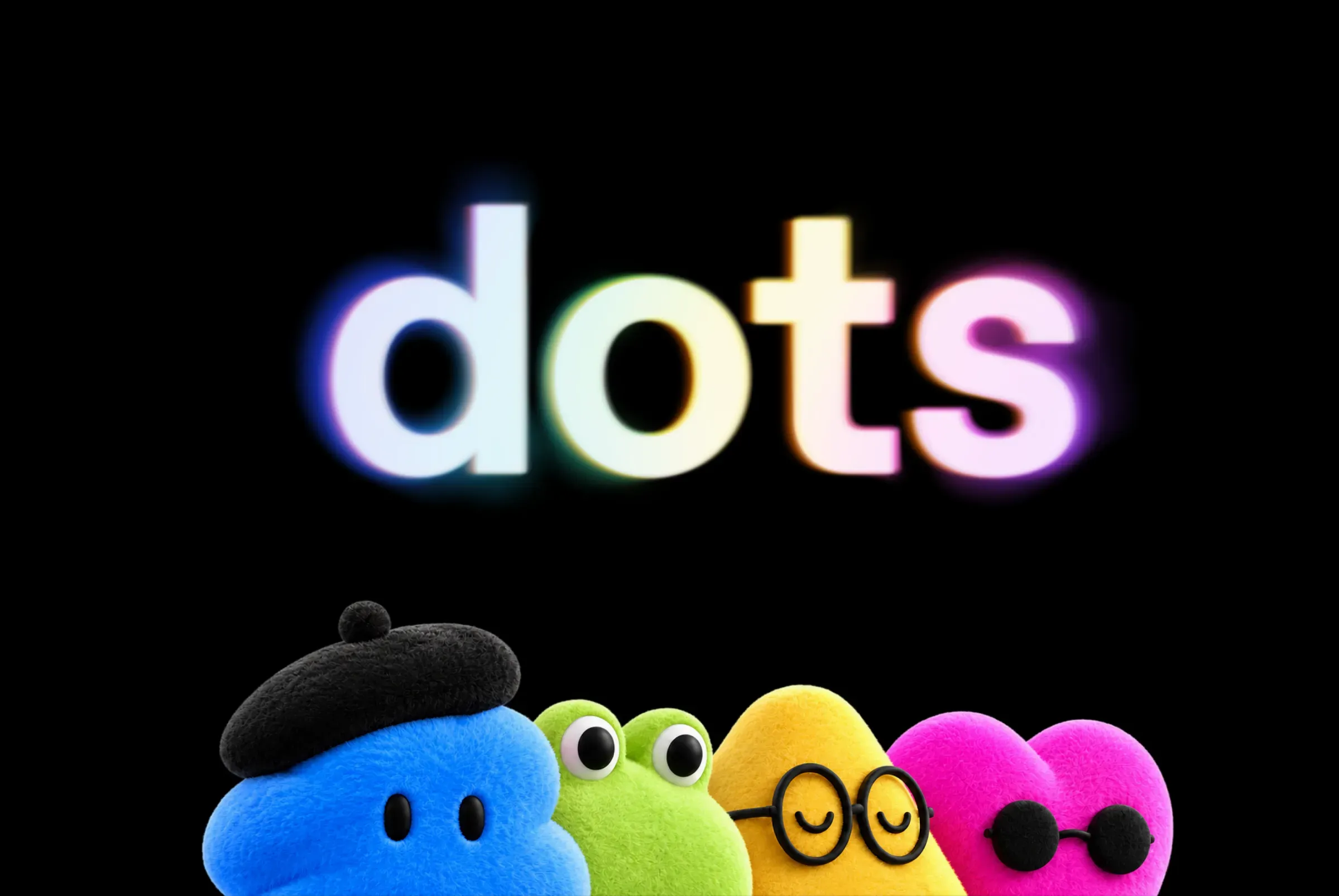
See how OpenAI announced Dots at DevDay 2026 with a presentation centered on its distinctive animated avatar, designed to humanize interaction with an autonomous agent.
Why the Name "Dots" and the Bubbly Avatar?
OpenAI made a deliberate design choice. Dots' animated avatar, with its rounded shapes and fluid movements, aims to make the agent feel approachable and non-threatening. It's as much a UX decision as a marketing one: an autonomous agent running continuously can generate anxiety. The design softens that psychological friction.
The Persistent Architecture: How Dots Stays Always On
The technical core of Dots is built on what OpenAI calls an "always-on" architecture. This isn't simply a long-running session. It's an agent infrastructure designed to operate outside the lifecycle of a conversation.
Here are the pillars of this architecture:
- Persistent memory: the agent retains state between sessions, with no reset
- Autonomous planning: Dots can create and execute multi-step action plans
- Tool access: native integration with APIs, browsers, code editors, and databases
- Execution loops: the agent can iterate on a task, correct its own errors, and relaunch sub-tasks
- Proactive notifications: Dots can alert humans when a decision falls outside its defined scope
This architecture fundamentally changes the relationship between humans and AI. You no longer give a prompt — you delegate a goal.
OpenAI Dots persistent AI agents built to work 24/7 rely on a dedicated cloud infrastructure that maintains agent state even in the absence of user interaction.
ChatGPT Space: The Human-AI Collaboration Environment
OpenAI simultaneously announced ChatGPT Space, a dedicated environment for collaboration between Dots agents and human teams. Think of it as a Slack where some team members are AI agents. They participate in threads, execute assigned tasks, report their results, and escalate when needed. It's a paradigm shift for product and development teams.
Concrete Use Cases for Developers and Startups
For a full-stack developer or a growing startup, Dots isn't just a tech curiosity. It's a serious automation opportunity. Here's where it gets practical.
Automating Development Workflows
A Dots agent can monitor your CI/CD pipelines, detect failed builds, analyze error logs, suggest fixes, and open pull requests — all without any initial human intervention. This is especially valuable for lean teams where every hour counts.
- Continuous pipeline monitoring
- Automatic analysis of deployment errors
- Weekly performance report generation
- Automated dependency updates after test validation
Proactive SaaS Product Management
For a SaaS product, Dots can handle first-level support, detect potential churn by analyzing usage patterns, and alert the product team before an issue becomes critical. It can also monitor key metrics and trigger automatic actions: email campaigns, escalations, configuration adjustments.
How Dots agents are transforming enterprise workflows shows concrete examples where teams reduced their operational workload by 30 to 50% by delegating repetitive tasks to persistent agents.
Integration Into Existing LLM Architectures
For developers already integrating LLMs into their applications, Dots represents a new orchestration layer. Rather than triggering one-off LLM calls, you can delegate to an agent that manages the entire call sequence, context handling, and intermediate decision-making on its own. That's a level of abstraction above what frameworks like LangChain or AutoGen provide today.
Dots in the Enterprise Ecosystem: Collaboration and Governance
OpenAI bets on autonomous agents for the enterprise with a strong conviction: organizations are ready to delegate real work to AI agents. But that delegation raises concrete governance questions.
In an enterprise context, Dots must integrate into existing structures:
- Access control: which systems can the agent touch? With what permissions?
- Auditability: every action taken by the agent must be traceable and reversible
- Human escalation: clearly defining when the agent must stop and request approval
- Environment isolation: preventing a production agent from affecting critical data
Multi-Agent Setups: When Dots Instances Work Together
OpenAI designed Dots to operate as part of a network. Multiple agents can coordinate on a single complex task. One agent handles research, another drafts content, a third validates and publishes. This multi-agent architecture opens up unprecedented possibilities for complex workflows — but it also amplifies the risk of cascading errors if proper guardrails aren't in place.
Dots AI agents announced at OpenAI DevDay 2026 include inter-agent coordination mechanisms based on standardized communication protocols.
The Security Stakes: What Dots Raises as Questions
No honest analysis of Dots can ignore the security questions. An always-on agent with access to tools, APIs, and sensitive data represents a significant attack surface.
The main risks identified by the community:
- Prompt injection: an agent browsing the web can be manipulated by malicious content
- Privilege escalation: an agent that can call tools may attempt to expand its own scope
- Infinite loops: without guardrails, an agent can spiral on a task and consume excessive resources
- Data leakage: an agent with file access can exfiltrate sensitive information without immediate detection
- Irreversible decisions: some actions (sending emails, deleting data) cannot be undone
The security challenges surrounding autonomous Dots AI agents were raised from the moment of the announcement, particularly by AI security researchers who point to the lack of clear standards for persistent agents.
The Post-Australia Context: A Launch Under Scrutiny
The timing of the Dots launch is no coincidence. The launch of Dots agents following the Australia security incident came just days after OpenAI issued a public apology for a user data incident in the region. That context amplified scrutiny of OpenAI's security practices for its autonomous agents.
OpenAI responded by highlighting several measures built into Dots: full action logging, human interrupt mechanisms, and configurable limits on the types of actions permitted. But for many experts, these measures remain insufficient given the complexity of real-world enterprise scenarios.
How to Integrate Dots Into Your Tech Stack
For a developer considering integrating Dots into their projects, the practical question is: where do you start?
Complete guide to OpenAI Dots AI agents details the initial integration steps, from setup in ChatGPT Space to deploying specialized agents for specific business workflows.
Here's a pragmatic, phased approach:
- Exploration phase: deploy a Dots agent on a non-critical task (log monitoring, internal report generation)
- Validation phase: audit every agent action for 2 to 4 weeks before expanding its scope
- Integration phase: connect Dots to your internal APIs via the custom tools available in the interface
- Scaling phase: deploy multiple coordinated agents across complete workflows
- Governance phase: set up monitoring dashboards and human escalation alerts
Current Limitations to Know Before You Deploy
Dots in 2026 is still a rapidly evolving product. Some limitations are important to understand before integrating it into production workflows:
- The persistent context window has size limits that are not publicly documented
- Integrations with on-premise systems require custom connectors
- Always-on agent billing can come as a surprise if execution loops aren't properly managed
- Advanced multi-agent features remain in limited access for certain regions
What Dots Means for the Future of Product Development
Dots isn't simply a new tool. It's a signal about the direction digital product development is heading. In the near future, a well-built SaaS application could include Dots agents as native components — not as add-ons.
Imagine a product architecture where:
- One agent continuously monitors infrastructure health
- Another handles Level 1 user support with automatic escalation
- A third analyzes usage patterns and suggests product improvements every week
- A fourth orchestrates deployments after automated test validation
This is no longer science fiction. It's what Dots makes technically possible today, with the right guardrails in place.
For full-stack developers building end-to-end products, the key emerging skill is no longer just "knowing how to code." It's "knowing how to design systems where humans and AI agents collaborate effectively." Dots accelerates the arrival of this new paradigm.
The question isn't whether autonomous agents will transform your stack. It's deciding when and how you'll integrate them intelligently.
Conclusion: Dots Marks the Beginning of the Agentic Era
OpenAI Dots represents far more than an additional feature in ChatGPT. It's the realization of a new model of human-AI collaboration, built on persistence, autonomy, and the delegation of real goals. Its always-on architecture, multi-agent capabilities, integration into ChatGPT Space, and enterprise use cases outline the contours of a deep transformation in technical work. The safety and governance questions surrounding it are not obstacles — they are milestones toward responsible deployment.
For developers and startups building digital products today, the time has come to explore what autonomous AI agents can concretely bring to your workflows. Start small, audit carefully, then gradually expand the scope of action. The agentic era isn't arriving quietly. It's arriving now, and OpenAI Dots is one of its first concrete faces.